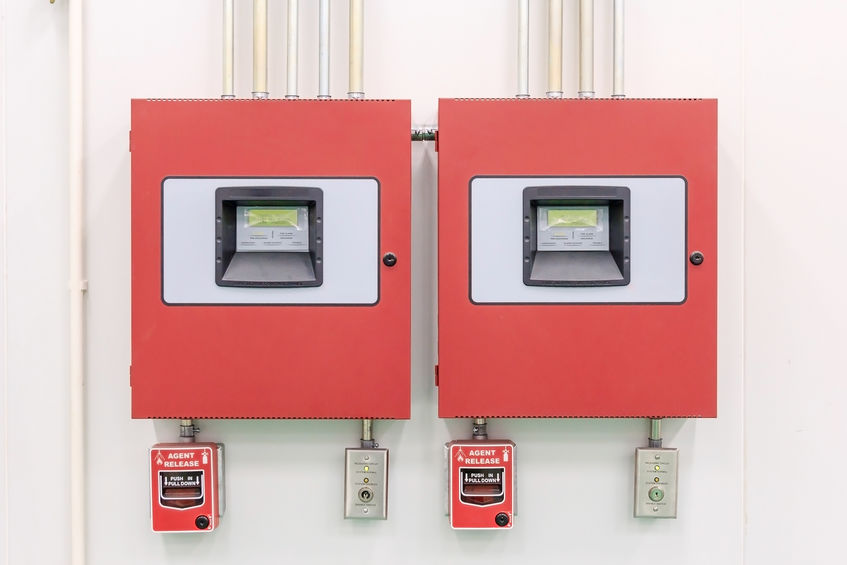
 Control stations for fire alarms are important because they’re a critical component when it comes to a property’s safety and security plan. Control stations are like having a person watching and waiting to see if there’s a problem at a property, and, when there is, they notify the authorities to come deal with it. Of course, these days, thanks to automation and technology, it wouldn’t make sense to hire one person to constantly be on the lookout for signs that an alarm is going off somewhere in your building– that’s where the control station comes in.
Centralized Monitoring and Decision-Making
The fire alarm control panel (FACP) continuously monitors all connected devices for normal operation, trouble conditions, and alarm events. It processes signals from smoke detectors, heat detectors, sprinkler flow switches, and manual pull stations, determining when a real emergency exists and what actions must occur next.
Rapid and Accurate Emergency Response
Control systems ensure alarms are triggered immediately and correctly. They activate horns, strobes, voice evacuation messages, and emergency communication systems to alert occupants. At the same time, they can automatically notify monitoring centers or local fire departments, reducing response time and limiting potential damage.
Typically the control station will let an operator at a monitoring facility know that an alarm has gone off. The operator can then assess the situation and, in most cases, alert the local fire department to go check it out, quickly.
Fire alarm monitoring is helpful because it allows for a response to an alarm condition even during non-business hours or at times when no one is on site. It can also be helpful if building occupants are, for whatever reason, unable to call 911.
A control station helps control a fire alarm system; It essentially monitors fire alarm signals and such things as sprinkler flow alarms/systems, suppression systems/discharge, hold-up alarms, temperature alarms, etc.
Code Compliance and Reliability
Commercial fire alarm control systems are designed to meet strict life-safety codes and standards, such as NFPA 72. They supervise wiring, devices, and power supplies, providing trouble alerts if a component fails so issues can be corrected before an emergency occurs.
If you have a fire alarm system in your building that currently needs replacement parts, or you’re looking for advice on such systems, in general, please talk with Life Safety Consultants by calling 1-888-557-0558. You may also find it useful to read our related article on operational tips for fire control panels.