
Fires can happen anywhere. All it takes is one faulty system or one moment of human error for a fire to ignite. Industrial plants are especially vulnerable — heavy machinery, flammable chemicals, complex electrical systems, and large numbers of workers all increase the risk. Many plant operators are not fully aware of the hazards that could lead to a fire, which is why having a well-documented fire prevention plan is not optional — it is essential.
OSHA oversees workplace fire safety regulations and holds businesses accountable for maintaining safe conditions. A proper fire plan protects both human lives and the business itself.
Common Fire Safety Violations in Industrial Plants
When OSHA inspects industrial facilities, certain violations come up repeatedly. The most common include locked or obstructed exit doors, unmarked or missing exit signs, excessive travel distances to exits, the absence of a fire alarm system, and no emergency action plan, fire prevention plan, or automatic fire suppression system.
Addressing these violations proactively is far less costly — financially and in human terms — than dealing with the consequences of a preventable fire.
OSHA’s Four Core Fire Safety Standards
OSHA’s workplace fire safety standards are built around four components: exits and escape routes, fire extinguishers, emergency action plans, and fire prevention plans. Each requires both documentation and employee training.
Exits and Emergency Escape Routes
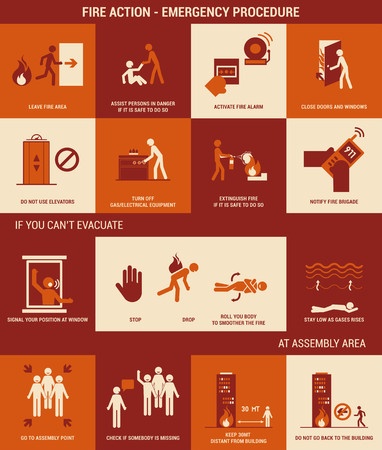
Every industrial plant must have at least two exit doors or other means of escape. Fire doors must remain unlocked and unobstructed whenever employees are in the building. All exit routes must be clearly marked with exit signs and kept free of clutter at all times.
Fire Extinguishers
If employees may need to fight small fires, the correct type and number of extinguishers must be available, fully charged, and up to date. Each extinguisher must be approved for the specific fire hazards present in that area of the plant and inspected on a regular schedule.
Employees who may use extinguishers must also be trained on fire hazard awareness, proper extinguisher operation, and how to alert other workers in an emergency.
Emergency Action and Fire Prevention Plans
When a fire poses a threat to life, a documented emergency plan must be in place — and every employee must be trained on it. At minimum, the plan should cover the designated evacuation routes, the procedure for accounting for all evacuated staff, responsibilities for shutting down critical operations, and the protocol for rescue and medical duties.
The plan should also address how employees will be alerted to an emergency (via voice communication, bells, or horns), the chain of command for additional guidance, procedures for handling flammable materials and waste, controls for ignition sources such as smoking or welding, and maintenance protocols for heat-producing equipment.
Fire Suppression Systems
A fire suppression system — such as a sprinkler system — serves three functions: detecting a fire, sounding the alarm, and delivering water or a suppression agent to the fire’s location. These systems require routine maintenance to function reliably.
If a suppression system develops a fault or goes offline, a backup plan for fire monitoring must be in place immediately. Never attempt to repair a fire suppression or detection system without professional involvement — an improper repair can create far more serious problems than the original fault.
Get the Right Parts to Maintain Your System
At Life Safety Consultants, we specialize in replacement parts for commercial fire detection and suppression systems. We stock both current and discontinued components, so you can restore an existing system without the expense of full replacement.
Repairing a system that is already wired into your building can save thousands of dollars in labor and installation costs — without compromising safety. If you are unsure which parts you need, contact Life Safety Consultants today for expert guidance.