
 The Jones family in Upstate New York survived a devastating fire that destroyed all of their possessions and came close to costing them everything — including their lives.
“We had smoke detectors downstairs and just one in the upstairs hallway,” recalls Sarah Jones. “Unfortunately, my daughter removed the battery from the upstairs detector when it started chirping and never replaced it.”
One summer night, while the family slept with a window air conditioner running, three downstairs smoke detectors went off around 4:30 a.m. No one heard them over the noise of the AC unit. The fire, which had started in the garage, was so bright that the light woke Sarah when it shone through her bedroom window. Smoke had already filled the room.
“If we had smoke detectors with proper batteries in our bedrooms, we would have been woken up immediately,” she says. “Thankfully, I saw the flames in time to get my family and pets to safety. It was luck that we weren’t killed.”
After the fire, the family spent months in a rental apartment while navigating insurance claims and searching for a new home. Every belonging had to be replaced — appliances, clothing, and even daily essentials.
“We now have working smoke detectors in every room of our new house,” Sarah says. “When they chirp, we change the batteries right away — no matter what.”
Why Every Room Matters
The Jones family’s story is a powerful reminder of how much placement matters. A smoke detector that cannot be heard offers no protection. Placing working detectors in every room — especially bedrooms — ensures that an alarm will reach you wherever you are, even if other detectors in the building have already triggered.
“Most people think a house fire would never happen to them,” Sarah says. “And hopefully it never will. But if it did, you would not want to lose a loved one simply because you were not prepared.”
Types of Smoke Detectors
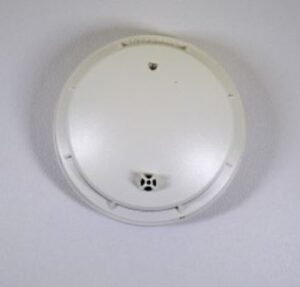
There are two main types of smoke detectors: ionization and photoelectric. Ionization detectors are best at detecting fast-flaming fires, while photoelectric detectors are more responsive to slow, smoldering fires. Hybrid models combine both technologies for broader coverage.
When shopping for detectors, either type will provide meaningful protection. For the best coverage, consider combination (dual-sensor) units or use both types throughout the building.
Battery Maintenance Is Critical
Most residential smoke detectors run on a single 9-volt battery or a set of batteries mounted on the back. These batteries should be checked and replaced at least once a year. If you hear a chirping sound, that is a low-battery warning — replace the battery immediately. Never remove a battery to silence the chirp without replacing it. That is the mistake that nearly cost the Jones family everything.
Why Smoke Inhalation Is Especially Dangerous
Many people assume they would wake up if their house were on fire. In reality, smoke inhalation can incapacitate a person before flames even reach them. Smoke contains carbon monoxide and hydrogen cyanide — both of which act quickly to overwhelm the body’s ability to breathe. The sooner a detector alerts you, the more time you have to escape safely.
Having working smoke detectors in every room is not just a good idea — it is a life-saving one. If you need reliable smoke detectors for your home or commercial building, browse Life Safety Consultants’ selection today.